Humanity’s singular gift to itself, Science, the systematic pursuit of knowledge through cumulative faculties of observation and experiment, is not an institution but a method – a disciplined way of knowing that transcends cultures and epochs. At its core, science is a neutral compass: observe, hypothesize, test, falsify, refine. It does not care for values, rightness and wrongness, oughts and ought-nots, profit or ideology; it simply minimizes error and maximizes reliability in ever-refining models of reality. Within the scientific world, there has always been a lineage of explorers driven not by utility but by wonder, who bustle about in scientific fervour for the love of solving mysteries and expanding the horizon of human understanding. Kepler charting planetary motion, Darwin cataloguing species, Einstein pondering the nature of light, Hawking opening up the fundamentals of the universe to new paradigms – these figures pursued knowledge for its own sake, embodying the spirit of curiosity. Their work reminds us that science is a celebration of awe, a cultural inheritance that enriches civilization as much as it advances technology.
Science has not been immune to the vicissitudes of power though. Science rests upon a teleological duality: one branch pursues knowledge for its own sake, while the other harnesses discovery for utilitarian ends. In the rarified atmosphere before, during, and after the World Wars, only a few scientists labored in painstaking research, their work subjected to ruthless peer review by contemporaries. But once governments and power structures discerned its geopolitical leverage, science developed a new face – one that could take the shape of an instrument of control.
This paradigmatic shift, of science becoming its own adversary, accelerated as the scientific elite expanded. The proliferation of research and publications has thrust millions into the fray, creating a cutthroat dynamic of “publish or perish” that diminishes not only the quality of scientific output but also the integrity of the method itself. Verification, once the cornerstone of peer review, no longer advances careers, and dubious claims now linger in the annals of scientific literature under the guise of legitimacy. Outputs of this regime are accessed by the scientifically illiterate consumers like reporters, government bodies and quasi-scientists and are diluted into easily digestible sound-bytes for the masses. This is where science goes from being a cutting edge to being frilled and pimped out.
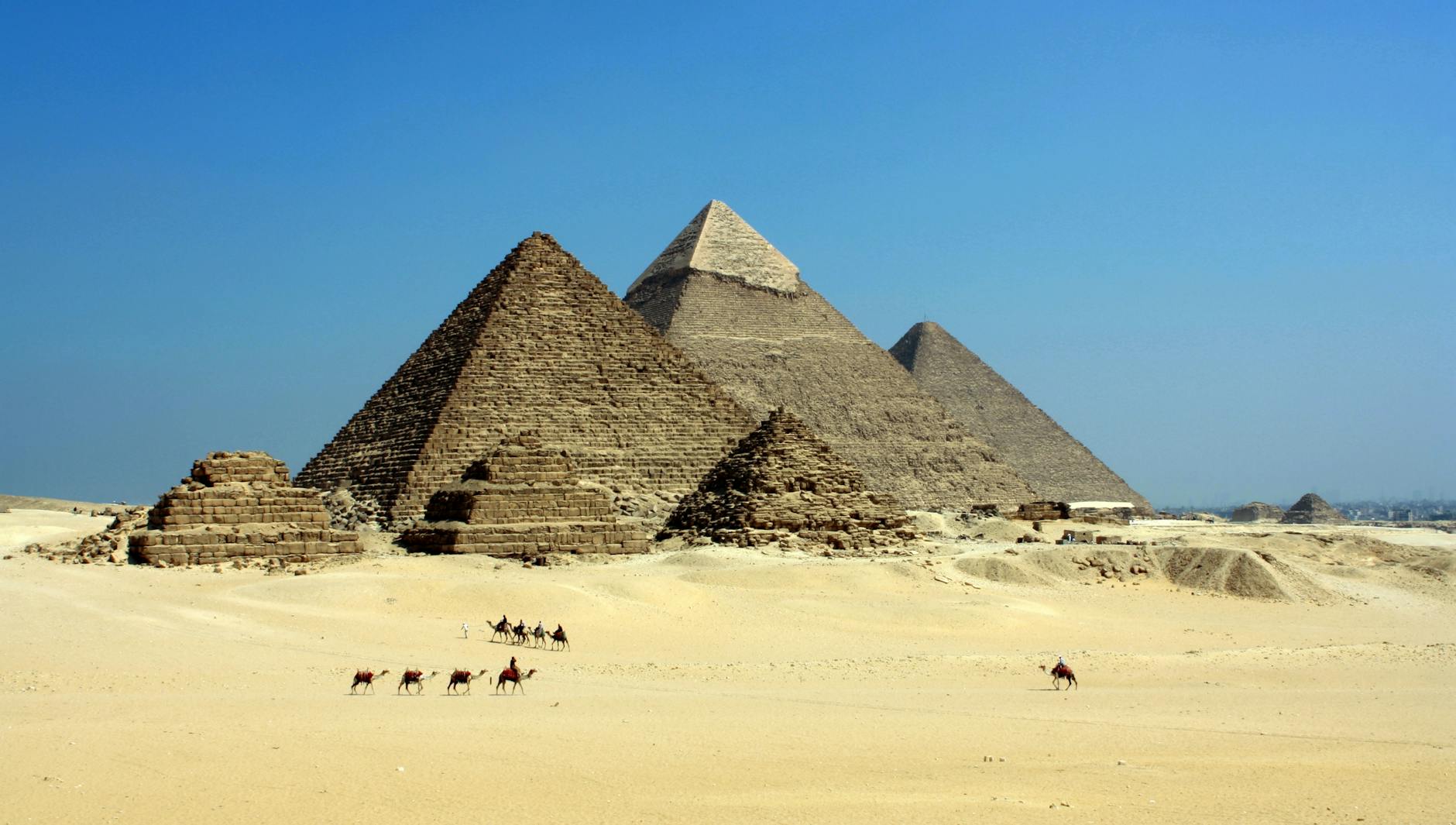
As Nobel laureate Peter Doherty observed, “If you want absolutes, speak to a politician or a pope.” Science, by contrast, traffics in ever-refined degrees of confidence. Yet in an age of shrinking attention spans, clickbait headlines demand oversimplification and bolder claims than research warrants. This erosion marks the death of science’s most vital component: the falsifiability of hypotheses and the rigor of peer review. We now inhabit a cultural moment where the line between evidence and fantasy blurs so profoundly that we cannot say with confidence whether the stones of the pyramids were raised by human ingenuity or by the waters of the Nile – or, absurdly, by aliens!
 My 2 cents