
Photo by Chris F on Pexels.com
We humans are wired to be lazy. Evolutionarily, we conserve energy. Calories were expensive. Our nervous systems evolved to reward efficiency. We prefer shortcuts. We automate habits. We stick to routines. We resist change. We jump to conclusions. We use tools. We assume patterns. We adopt group opinions. We follow fashion. We avoid difficult conversations. We take the beaten path. We use heuristics to ensure we act to the ‘best’ of our abilities with the least amount of work. We spend as little energy as possible unless survival requires otherwise. It looks, feels or projects laziness, stupidity or moral weakness but it simply is biological optimization.
We have also learned that applying knowledge to new challenges and winning at it are socially laudable. Others appreciate us for investing the hard work of thinking up a solution. But it is hard. Not all of us can do it. The few of us who do, cannot do it all the time. Thus, we are a species condemned to appreciate hard work but rely on laziness for our daily living. This trait exemplifies the trope Christopher Hitchens popularized when he described the religious human as “created sick but commanded to be well”. Efficiency, laziness – same difference. The scientific view: it is an evolutionary feature. The cultural judgement: it is a social bug. And this is the crux of this essay – not advocacy for laziness, more a diagnosis of our illness.
And because most human behaviour is adaptive, societies ended up believing that habit is safe, certainty is comforting, predictability is good. Our societies, ergo, are driven by this infernal drive, this habit, imitation, and the momentum of whatever world we were born into. Oblivion – not in the sense of ignorance as a personal failure or a deliberate rejection of knowledge – but as a kind of inherited unawareness – shapes far more of human behavior than intentional harm ever does. Don’t get me wrong – harm caused by oblivion is still harm! Prejudice, gender norms, dogma, caste/class hierarchies, supremacist narratives, conformity are large-scale social harms that depend on oblivion. People repeat what they’ve seen, trust what they’ve been told, and rarely pause to examine the deeper assumptions beneath their daily lives. This is because people are busy, tired, fearful, or simply trying to get through the day. And the way children grow up inside these environments – whether they conform to this oblivion or rebel against it – varies dramatically across cultures.
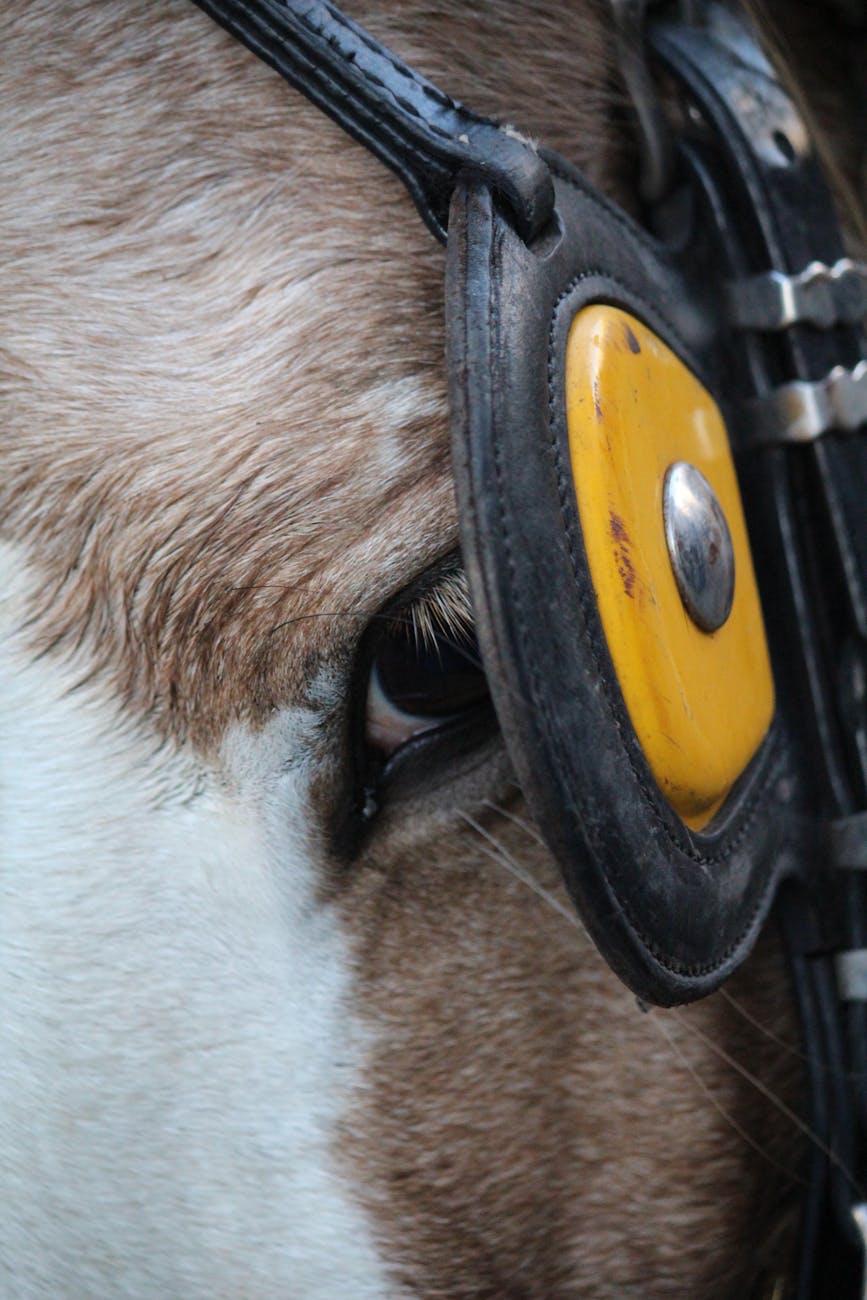
In many societies, oblivion is woven into the fabric of authority. Adults are treated as natural repositories of wisdom, even when they are simply repeating inherited beliefs. Children in such environments learn early that questioning is risky. In parts of South Asia, the Middle East, and East Asia, for example, respect for elders is not just encouraged but enforced through cultural norms. A child who asks “why” too loudly may be seen as disrespectful rather than curious. The result is a kind of social quietness: children learn to internalize the idea that adults know best, even when adults are themselves navigating life with limited information and unexamined assumptions.
This means these societies are structured around continuity. The goal is stability, not exploration. Oblivion becomes a shared comfort – a way of keeping the world predictable. Children who conform to this system often grow into adults who value harmony, duty, and social cohesion. They may not question the beliefs they inherited, but they also don’t intend harm. They simply continue the patterns that shaped them.
In contrast, societies that valorize individualism often encourage a different relationship to authority. In parts of Europe and North America, children are taught that questioning is a sign of intelligence, not rebellion. Teachers may praise a student who challenges an idea. Parents may encourage debate at the dinner table. The cultural script here is that autonomy is a virtue, and that authority must earn respect rather than assume it. Yet even in these societies, oblivion persists – just in different forms. People may be oblivious to their own privilege, to the limits of their worldview, or to the ways conformity still operates beneath the surface. The difference is that the oblivion is less about obedience and more about assumption: the assumption that one’s own perspective is naturally correct.
Children who grow up in these environments learn to rebel almost as a rite of passage. Teenage rebellion is expected, even celebrated. But this rebellion often happens within safe boundaries – challenging parents about curfews, not questioning the deeper structures of society. The result is a kind of curated independence: people feel free, even when they are shaped by forces they rarely examine.
Then there are societies shaped by instability – places where political upheaval, economic uncertainty, or social fragmentation make authority inconsistent or unreliable. In such environments, lessons children learn are inconsistent: adults are not necessarily wise, but they are powerful. Oblivion here is at times comforting and at times dangerous. A parent may cling to rigid beliefs not out of confidence but out of fear. A teacher may enforce rules not because they make sense but because order feels safer than chaos. Children in these societies often grow up hyper-aware of the fragility of the world around them. Some conform tightly, seeking safety in structure. Others rebel early, sensing that survival requires independence. The dividing line is not cultural but psychological: whether the child finds security in obedience or in self-reliance.
Across all these contexts, the core truth remains: most people are not deliberately malicious. Social ‘evils’ exist because society lives inside the limits of its awareness. A parent who insists on tradition may be trying to protect their child from uncertainty. A teacher who discourages questions may be repeating the only model of authority they’ve ever known. A community that resists change may be trying to preserve a sense of identity in a rapidly shifting world. Oblivion is not an intentional act; it is a default setting. Supremacist cultural environments take the more rigid form of this oblivion. The instinct to conserve energy by trusting inherited beliefs becomes fused with identity, inherited myths, selective storytelling and normalized ‘non-belonging’ of outsiders. Supremacist worldviews are rarely taught as hatred. They are passed on as tradition, pride or divine order. Cognitive dissonance in this culture is achieved by offering simple explanations for complex realities. They provide ready-made answers about who belongs, who deserves, and who threatens. This simplicity is metabolically cheap — and emotionally seductive.
The children who rebel against oblivion tend to be the ones who notice the cracks early. They sense that adults are improvising. They see that certainty is often a performance. They realize that authority is not the same as insight. These children grow into adults who question, explore, and sometimes disrupt. They are not always comfortable people to be around, but they are often the ones who expand the boundaries of what a society can imagine. In extreme supremacist cultures, questioning the status quo doesn’t just feel difficult, it feels dangerous, disloyal, or even unthinkable. Meanwhile, the children who conform are not lesser. They are participating in the continuity of the only culture they know – their own. They maintain rituals, relationships, and the social glue that keeps communities functioning. Their oblivion is not a flaw; it is a form of trust.
The real challenge – and perhaps the real opportunity – is recognizing that both paths are necessary. Societies need continuity and disruption, stability and questioning. And individuals need compassion for the fact that most people are simply doing the best they can with the awareness they have and are in various stages of adding awareness to their survival kit.
Oblivion is a human condition. And understanding that is the first step toward seeing ourselves and others with a little more clarity and a lot more grace.
 My 2 cents