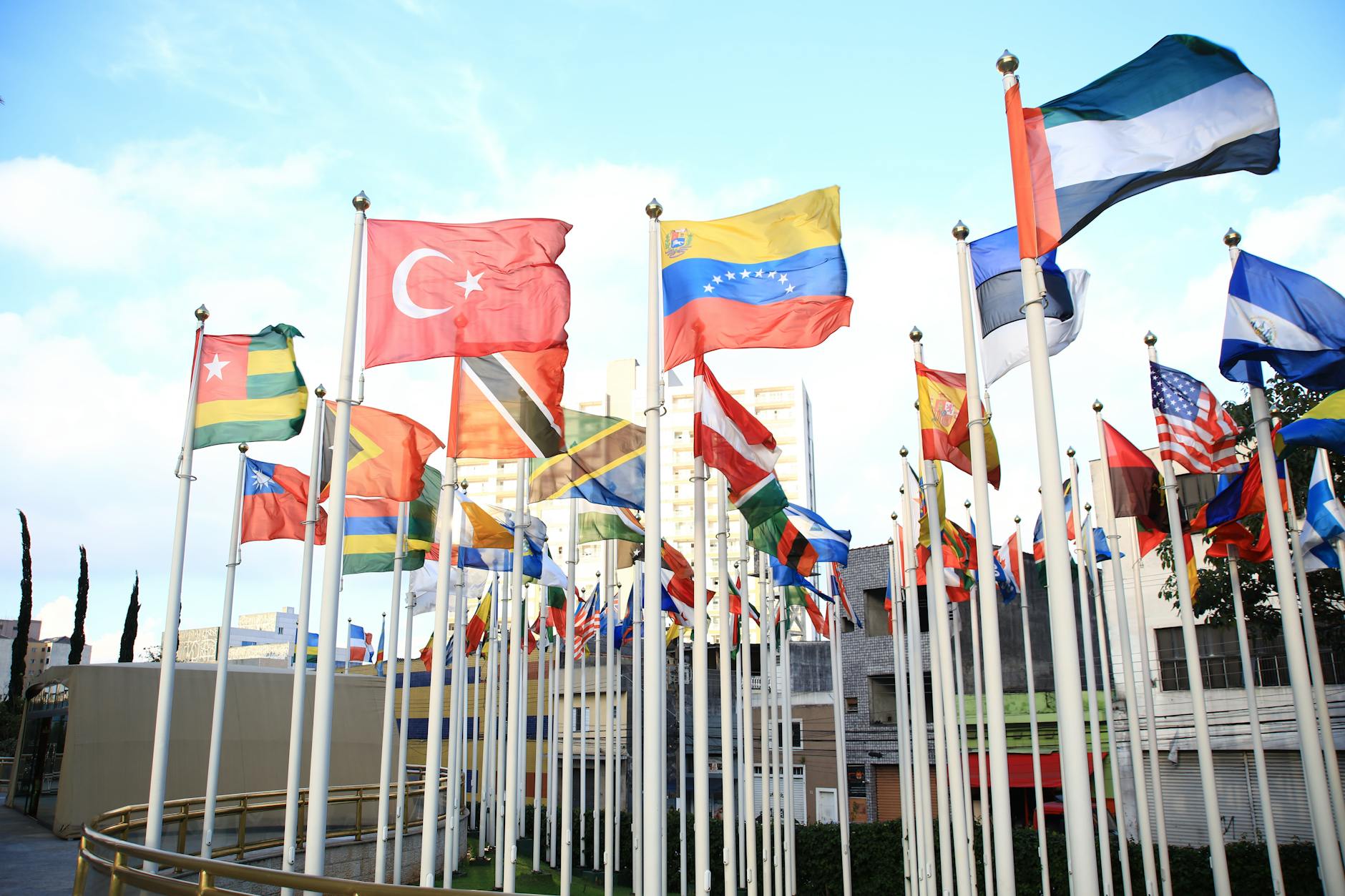
Every year on August 15, back in my school in Pune, India, Independence Day followed the same script: the flagpole painted a fresh matte silver; Mr. Shinde, the PE Teacher, checking and rechecking the strategically tied halyard around the furled flag; the drumbeat echoing across the courtyard; the headmaster’s speech drifting into the sometimes misty, mostly sunny, morning; the loud chanting and singing of the pledge and anthem; and finally the milling around the street hawkers, where assembled parents were coerced into buying sweet treats for us. We were all in it. We stood straight, we sang loudly, we saluted the flag because that’s what good patriotic students did. It was a happy, beautiful ritual. I remember feeling this sense of being connected to something much larger than the school buildings or the playgrounds or the lawns. It was my entire country! Only later did I begin to grasp how those assemblies were impacting my personality without me knowing. They were solidifying something quieter and deeper: that patriotism is not just a feeling, it is also a demand of loyalty. It is as much this sense of deep respect for my nation as it is a performative exhibition of fealty. The ritual carried an unspoken lesson about obedience. Unflinching loyalty. Any hesitation can be seen as disrespect. That tension between collective belonging and unquestioned loyalty is exactly where I am now beginning to feel the strain. Especially when the performance becomes culturally necessitated in group settings – anthem-playing, flag-hoisting, national mourning, and, I fear, the biggest of them all – war!
That school flag‑hoisting rhythm still sits somewhere in me. Participate. Don’t hesitate. It was simple then. It isn’t simple now. Scripted, ritualized gestures used to exhibit sentiment is awkward for a freethinker. Sure, it is there to indicate actual feelings but forcing it is tantamount to imposing a lack of freedom. In 2021, during the T20 Cricket World Cup, Cricket South Africa (CSA) issued a directive requiring all players to take the knee as an anti‑racism gesture. Quinton de Kock, South Africa’s star player, refused, withdrew from the match, and was widely criticized. His teammates were surprised. De Kock explained later that his refusal wasn’t necessarily a rejection of anti‑racism; it was a rejection of compelled performance. He had participated in other symbolic gestures (black armbands, pink ODI shirts), he had a mixed‑race family background but, to his detriment, he also had the belief that proving moral commitment didn’t require performative gestures! He wasn’t refusing solidarity, his objection was simply to being forced to participate in what others decided is the right ‘symbol’ in that moment. The cricket world was divided, and CSA faced backlash for mandating the gesture. De Kock later apologized, clarified his reasons, and agreed to take the knee going forward. But a point was made.
The social (everyone is watching!), emotional (fear, grief, anger), moral (you don’t want to seem indifferent to suffering) and political pressure (states love binaries because they’re easy to control) that patriotism exerts in public become a test of loyalty rather than an uplifting sensation of nation building. That’s exactly where we humanists feel the squeeze. Because while we stand with collective emotion, we reject unquestioned obedience. We have fondness for the place we share, we are committed to shared values, we desire to contribute to common good and feel a sense of gratitude for the institutions that protect common rights and actively work to ensure everybody flourishes.
For me, her in Canada, that old script shows up in new ways. A few loud voices in the US joke about Canada becoming their 51st state and suddenly everyone here stiffens. Pride kicks in. Defensiveness too. Flags go up everywhere. And I feel the pull myself, I too feel I have to protect my new adoptive mother! I want to belong. I see Canada taking positions on global conflicts that are admirable. A Leger poll indicates that 61% disapproves of the US-led military actions in Iran. The PM navigates a delicate balance, aiming to maintain its alliance with our immediate neighbour while advocating for a peace. It might be performative. But I’d like to believe that there is a national sense of principle. But 39% of my country agrees with the war! Maybe more depending on how that question is asked! This won’t sit right with my instincts. I think about people like me in both the US and Iran. They are stuck with a binary imposition on their loyalties – ‘with’ or ‘against.’ No luxury of vague line-drawing or nuanced argument. What if Canada gets pulled in? I can’t bring myself to cheer for everything just to prove I’m loyal. So I’m back in that school courtyard again, trying to stand tall without switching off my mind.
Wars are rarely morally pure. World War II might have pulled some unusually stark moral lines. It was a racial-hierarchical program of extermination by a totalitarian system that crushed dissent and saw annihilation of people preferable to sharing the world. So it was easy to get behind the Allies against the Nazi war machine. There were grey areas though. Firebombing of Dresden? Hiroshima? Internment of Japanese Americans? These are few of other heart-rending atrocities committed by allied forces in the name of waging war. What about those German innocents with humanist, pacifist attitudes? They faced an impossible situation. They could see the evil and despise the regime but resistance, or even fleeing, meant clear death. The hurt that comes from switching off compassion at borders is universal.
This much is clear: unless one is a psychopath or in a psychopathic rage, any situation that erases human complexity and prioritizes survival over compassion is a situation to avoid. Principles, such as patriotism, are guiding lights, not handcuffs. A humanist can say: “I stand for the anthem out of respect for people, not symbols.” “I support my country’s safety, but I won’t support cruelty.” “I feel solidarity during war, but I won’t suspend my critical thinking.” “I participate in rituals when they bring people together, not when they demand obedience.”
So, what will I do during war? Can I remain patriotic and still human? I cannot control being dehumanized by the weapons of the enemy. I cannot, also, escape the vileness that creeps into ordinary, civic-minded people during crises, putting them in a temporary but dangerous state of survivalist selfishness that shrinks moral horizons. These imaginary lines are otherwise wide enough to include larger sets of people, but they shrink to a “kill or be killed” state, driven by the prefrontal cortex (reason, empathy) being overridden by the amygdala (fear, survival). This is a natural outcome of war, and I accept it. But can I stand against the forces that make me dehumanize others? Yes, that is something I wrestle with. It is something I can control, but there will be costs attached.
As much as I can, before fear seeps in and trust in the systems of society collapses, my first responsibility is to people, not abstractions. Even if things start getting bipolar, I plan to keep that anchor in my head at all times. What preserves life? What preserves dignity? What buys humanity around me time? What helps improve conditions around me? The deployment of my response will use the same tactic that could lead me to failure – shrinking my horizons to the local, the tangible, the human-sized: neighbours, elders, the frightened, children. My role, then, is one of civic resilience. Organize. Find leaders and back them. Become a leader if required. Keep hope alive. Resist the slide into hopelessness and selfishness. It is my goal to stay human when everyone else is being pushed toward tribal reflexes.
 My 2 cents