
– Sacralizing the Mundane –
In a dusty little village, tucked between an agitated forest and a river that never stopped gossiping, there lived a teacher whose wisdom calmed the weary folk of the village who ate less than two meals a day. Ground to the dust by their hard work in the fields, almost indistinguishable from the land, every evening, villagers gathered outside his hut at the outskirts of the village – a crooked little structure with a thatched roof that always looked surprised to still be standing – to listen to him speak of brighter things.
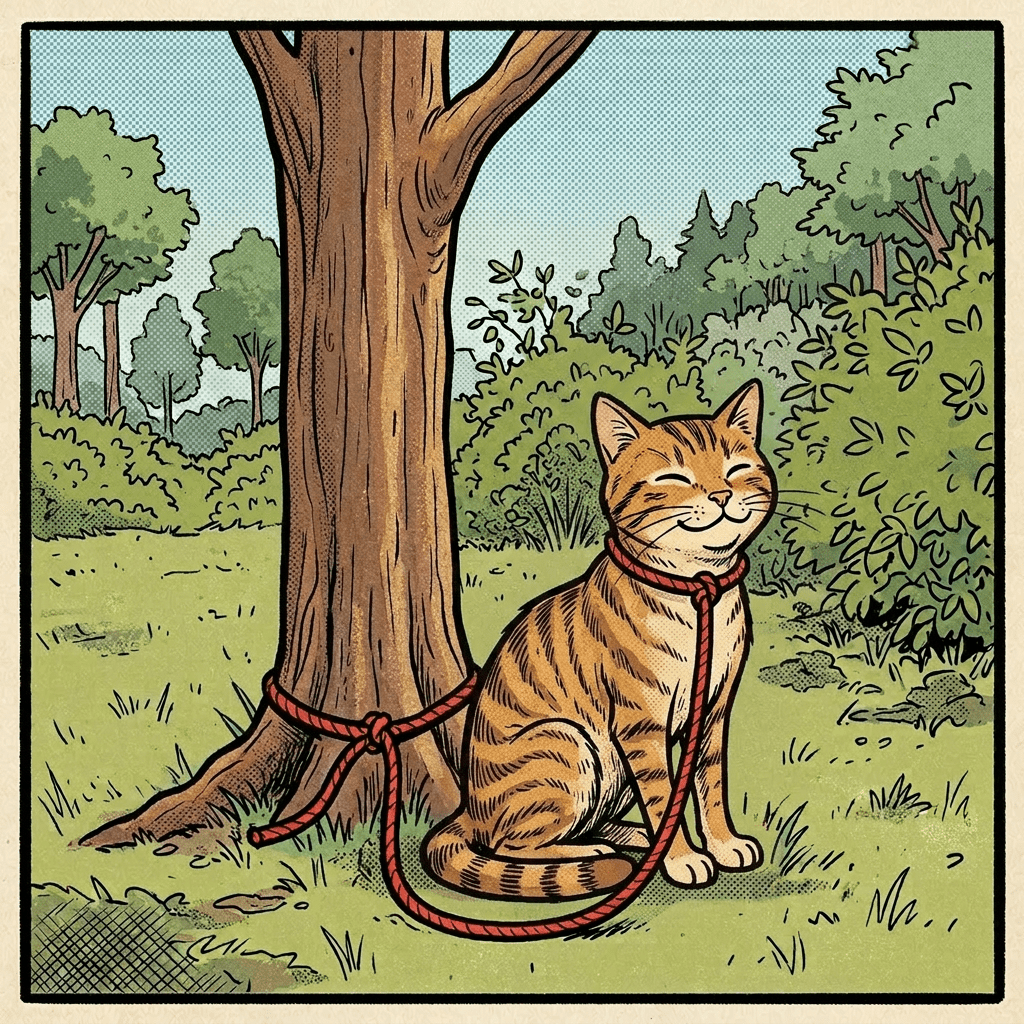
The teacher had a cat. A gloriously indifferent, fairly happy creature who believed that the help he gave in keeping the granaries free of mice entitled him to a benign degree of menace. Oblivious to time and space, the cat strolled, stretched, purred, scratched. Brushing against legs, knocking down water tumblers, climbing on shoulders mid-enlightenment. The teacher’s quiet voice deepened the wake the cat left behind him. The teacher didn’t mind. But the villagers did. They gently tied him to a post in the courtyard. Not as punishment, just to separate enlightenment from chaos.
Years passed. The teacher grew old, the cat grew older, and eventually both slipped out of the world with the same quiet dignity they had lived in it.
A new teacher took over. Earnest, eager, and slightly terrified of disappointing the villagers. On his first evening, he stepped out to speak and the villagers looked around, puzzled.
“No cat,” someone whispered.
“How can we begin without the cat,” another murmured, as if the universe itself might refuse to cooperate.
So they did the only reasonable thing: they went into the village and found another cat. Looked somewhat like the original but a bewildered, unwilling, thoroughly unphilosophical one. They tied it to the pole. Now, that made sense. Let’s commence with brighter spoken things. The dusty bodies settled in unison even as the cat meowed protestingly.
The new teacher did not let the old one down. He did a great job! He improved the teachings. Written tablets to refer to prior teachings. Water to drink. Occasional bites to eat. The villagers contributed to organizing these, of course.
The cat at the post settled into its new reality.

